 +91 9112515557
Fine jewellery is made to endure generations. With the right care, every Jhunjhunwala piece retains its brilliance, beauty, and value for a lifetime.
Every Jhunjhunwala Diamonds piece is crafted with meticulous precision — from the selection of each stone to the finishing of every setting. Proper care ensures that craftsmanship endures.
Diamonds, precious metals, and fine settings are remarkably durable — but they are not invincible. Daily wear exposes jewellery to skin oils, cosmetics, household chemicals, and physical contact. Without proper care, even the most brilliant diamond can appear dull and fine metals can lose their lustre.
This guide provides clear, practical, expert-backed guidance for cleaning, storing, and maintaining every type of fine jewellery — whether it is a diamond engagement ring worn every day, a gold necklace cherished for occasions, or a platinum band symbolising a lifetime of love.
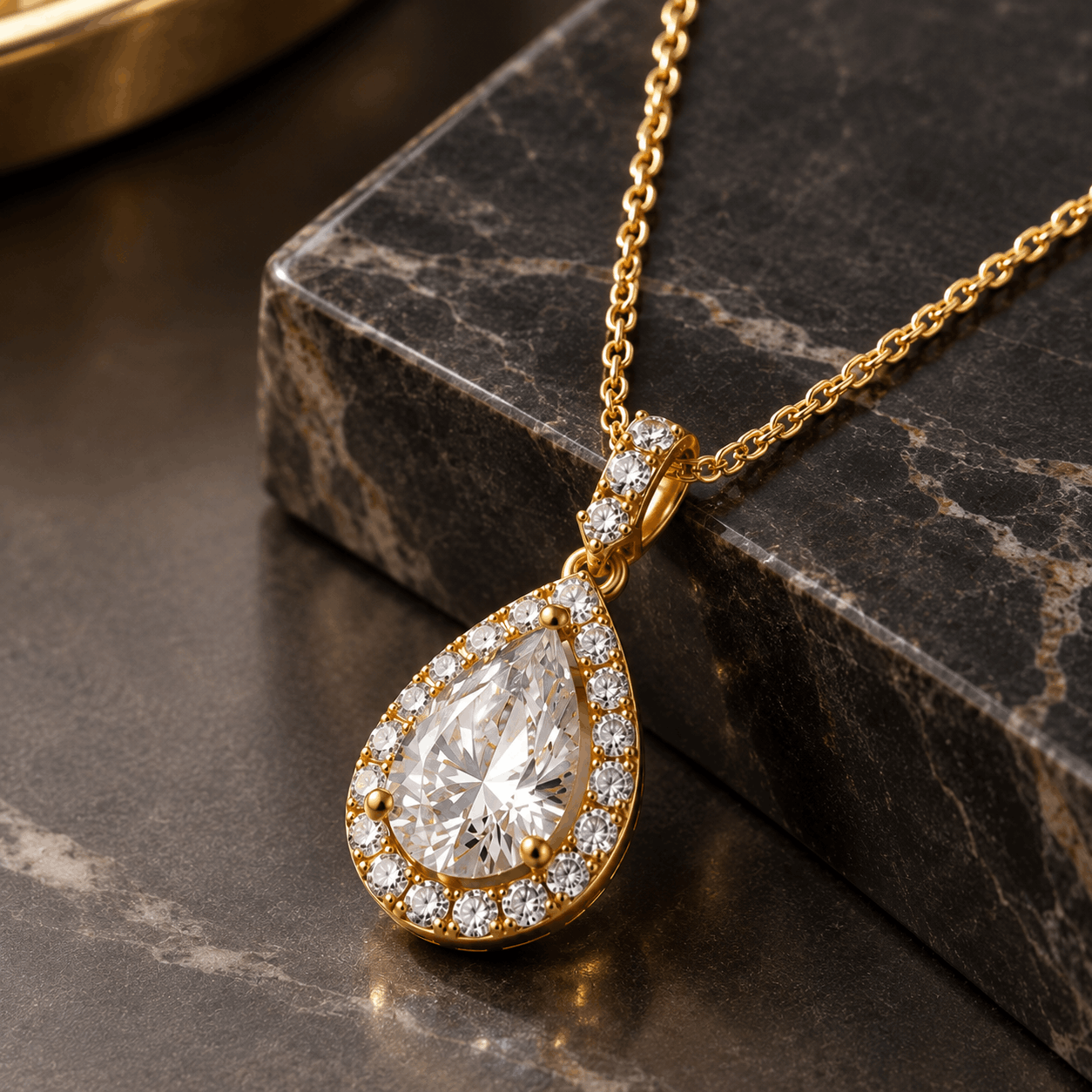
Fine jewellery rewards consistent, gentle attention — maintaining brilliance and structural integrity for generations.
Each cut has a unique facet arrangement that captures light differently – and may require slightly different attention when cleaning.
Ten of the most popular diamond cuts. Each benefits from gentle, consistent cleaning to preserve maximum brilliance.
Diamonds are the hardest natural substance on Earth — yet they attract grease, skin oils, and residue with surprising ease. Proper care keeps your diamonds sparkling as brilliantly as the day they were set.
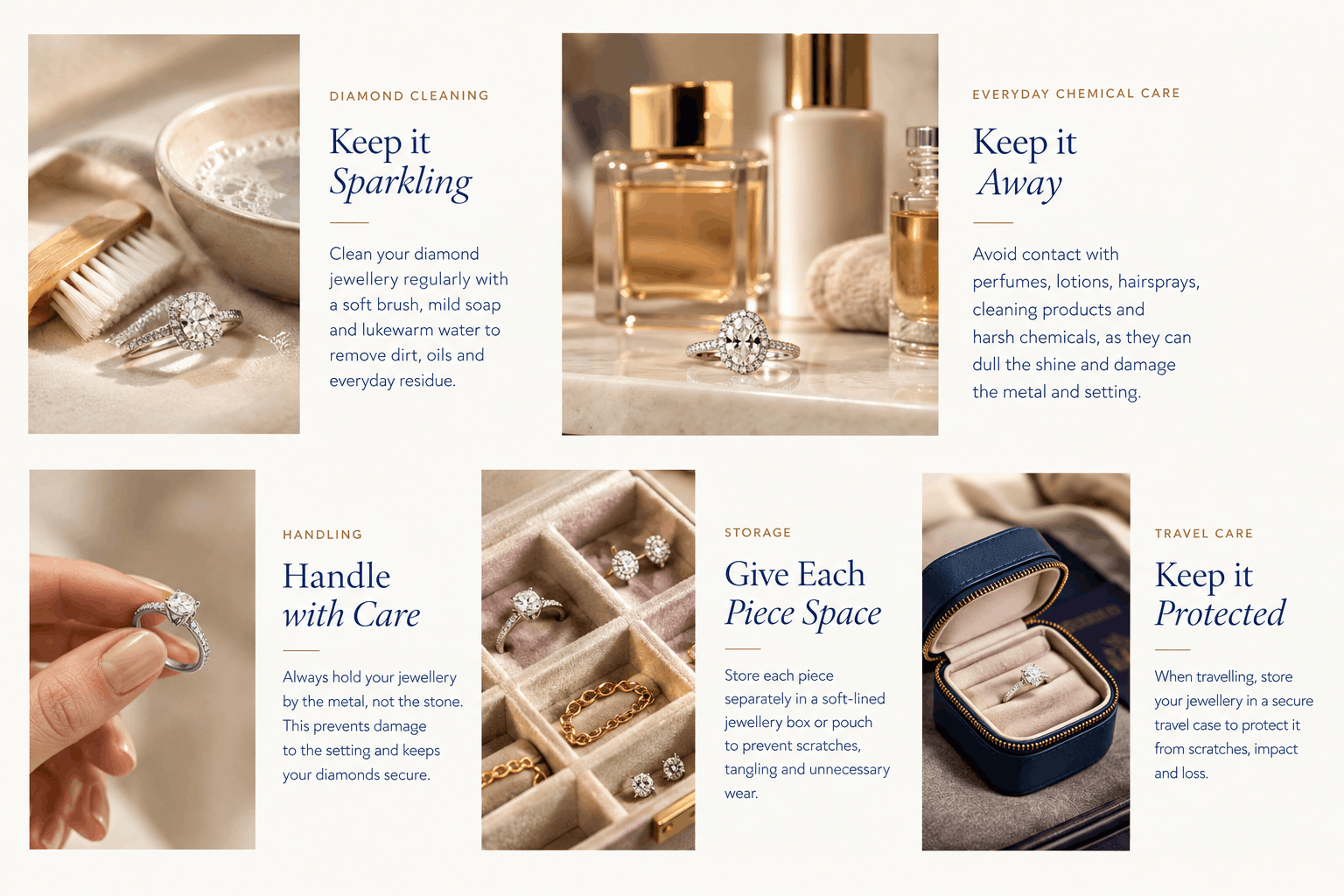
Apply perfume, hairspray, and lotions before putting on jewellery, not after.
Always apply lotions, creams, sanitisers, and perfumes before wearing diamond jewellery. Chemicals in these products can damage both the diamond and the metal setting.
Remove diamond jewellery before showering or bathing. Soap and shampoo can damage the jewellery and create a film on the diamond that dulls its radiance.
Handle diamonds by their metal settings rather than the stone itself to minimise oil transfer and keep the stone clean for longer.
Put on jewellery as the last step of getting ready. Remove it first when undressing at the end of the day.
Safe and effective. Requires only two household items.
Warm water with a few drops of mild soap. Leave for 20–30 minutes.
Soft toothbrush. Focus under the stone and along the girdle.
Warm running water. Plug the drain first.
Lint-free cloth or leave to air dry on a clean, flat surface.
Check prongs for looseness or movement before storing.
For overnight cleaning, soak in warm water with mild detergent or a few drops of ammonia, then gently brush with a soft toothbrush.
Chlorine bleach damages gold alloys irreversibly and can permanently dull settings.
Toothpaste and abrasive cleaners scratch precious metals and cloud stone surfaces over time.
Home ultrasonic machines can loosen prongs and chip included or treated diamonds. Seek professional guidance first.
Hot water causes thermal shock that can affect certain stone treatments and loosen settings.
Hand sanitiser contains alcohol that dulls precious metals with repeated use.
Contact sports and the gym impact can chip or crack even the hardest diamond, and may cause prongs to bend.
Visit a jeweller at least once a year for professional cleaning and a thorough prong inspection.
Professional ultrasonic cleaning is safe when performed by an expert who can first assess your specific stone and setting.
Annual inspections catch prong wear, micro-fractures, and loose settings before a stone is at risk of being lost.
Regular cleaning by a diamond expert, alongside loose-setting checks, protects your precious investment.
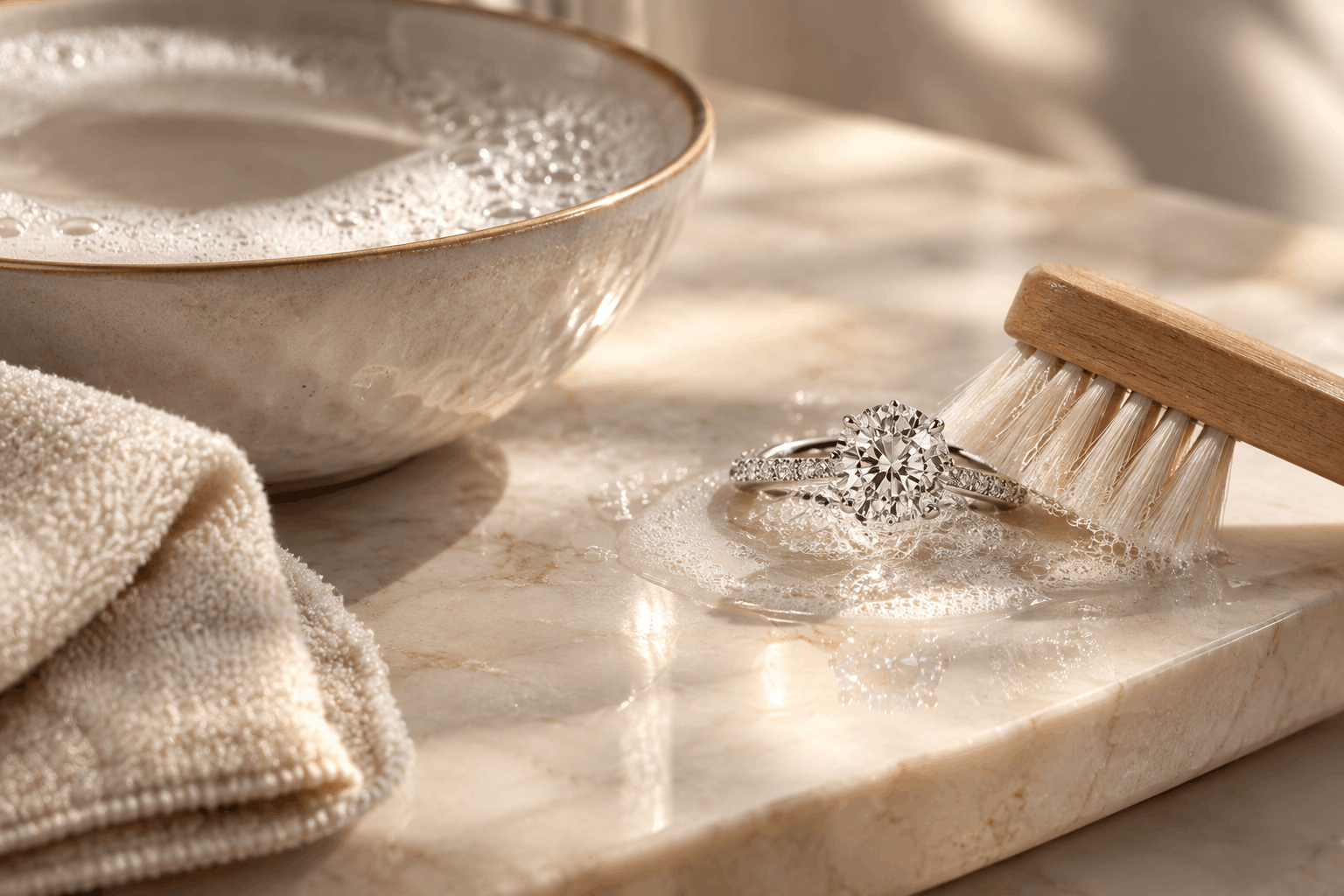
Warm soapy water and a soft brush — all you need for safe, effective at-home diamond cleaning.
Diamonds naturally attract grease. Even the oils from a fingertip can noticeably reduce sparkle within hours. A gentle weekly rinse makes an extraordinary long-term difference to brilliance.
The pavilion base and girdle accumulate the most oil and grime. Always concentrate cleaning beneath and around the stone.
Gold is timeless — but even the finest gold jewellery requires gentle, consistent attention to maintain its warmth, depth, and luminous shine. Understanding your karat is the foundation of proper gold care.
With the highest alloy content of the three, 9K gold is exceptionally durable and scratch-resistant. Its lower gold content makes fine jewellery more accessible without compromising on beauty or craftsmanship.
More durable due to its higher alloy content, 14K is well suited for active wear, intricate settings, and pieces that experience frequent handling and regular daily contact.
The ideal balance of purity and durability. The preferred karat for diamond-set fine jewellery and the standard used across the Jhunjhunwala Diamonds collection.
Remove gold jewellery before swimming. Chlorine reacts with gold alloys and causes discolouration that can be permanent with repeated exposure.
Take off gold pieces before applying sunscreen, body lotions, or perfume. These leave residue that accumulates over time.
Avoid wearing gold during heavy exercise, gardening, or manual work where it could sustain impact or be exposed to dirt and grime.
Gently wipe each piece with a soft, dry cloth after wearing to remove skin oils and perspiration before storing.
Use a solution of warm water and detergent-free soap with a soft-bristled brush. Soak for 15–20 minutes.
For tougher stains, soak for 3–4 minutes then wash gently under running water.
After cleaning and rinsing, always dry and polish with a chamois or soft cloth to avoid scratches and bring out the shine.
Never use paper towels, which have fibres coarse enough to cause fine surface scratches on gold.
White gold is rhodium-plated to achieve its bright silver-white appearance. This plating wears away naturally over time. Professional rhodium re-plating every 1–2 years restores its original lustre completely. This is a routine and entirely expected part of white gold care — not a sign of poor quality.
Store each gold piece separately in soft cloth pouches or individual box compartments to prevent contact scratching.
Keep gold away from direct sunlight and humidity, which can accelerate tarnishing and affect settings.
Never store gold pieces in plastic bags — moisture becomes trapped and accelerates discolouration.
Do not store yellow, white, and rose gold pieces together without individual protection. Their different alloys can cause surface marking.
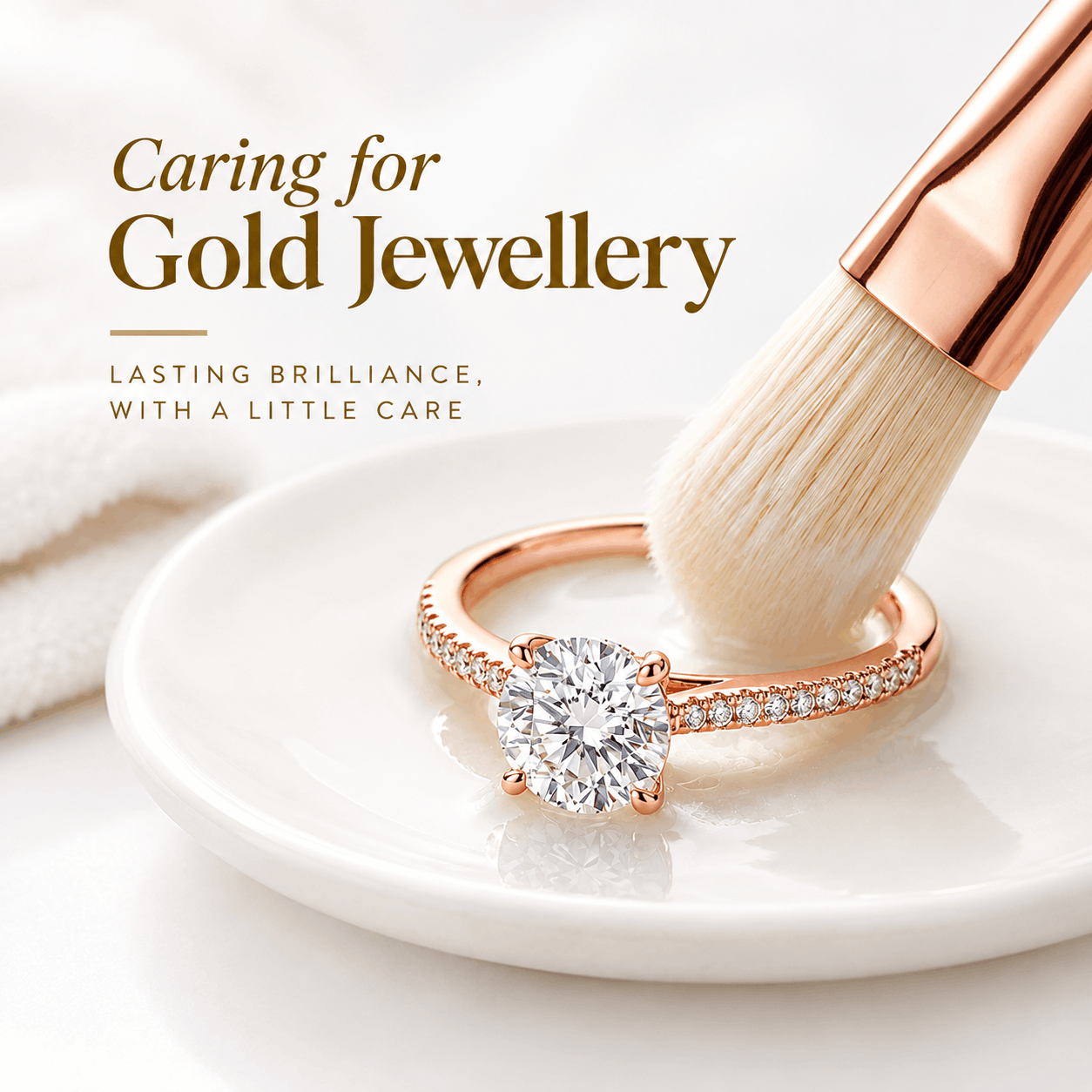
Yellow, white, and rose gold all benefit from the same gentle care routine.
Chlorine and bleach — cause irreversible damage to gold alloys. Keep all pieces out of swimming pools and away from household cleaners.
Creams, lotions, make-up, sanitisers, and perfumes — the chemicals in these products affect the shine and lustre of gold. Always apply them before putting on your jewellery.
Abrasive materials — including baking soda paste will create visible micro-scratches on gold surfaces.
Soap and shampoo in the shower — remove gold jewellery before bathing so it does not come into contact with these products.
Extreme temperatures — can affect the shine and lustre of your jewellery. Avoid wearing pieces during extreme weather or temperature changes.
"Gold is a natural element. Treat it with the same mindfulness you would offer to anything precious and irreplaceable."
Jhunjhunwala Diamonds · Care Philosophy
Platinum is the rarest and most enduring of precious metals — naturally white, hypoallergenic, and remarkably dense. Understanding how platinum ages is the key to caring for it with confidence.
Fine platinum jewellery is 95% pure — compared to 75% for 18K gold — making it one of the most precious metals used in fine jewellery.
The Pt950 hallmark guarantees metal purity and is the internationally recognised standard for fine diamond jewellery platinum settings.
Unlike gold, platinum develops a natural satin patina over time. Many connoisseurs consider this a mark of character. It can always be polished away if preferred.
Platinum does not lose metal when it is scratched — it displaces metal within its own surface, creating micro-grooves that produce a diffused, matte-satin reflective quality known as patina. This is entirely natural and expected, not a defect.
While it is the strongest of jewellery metals, platinum can scratch. However, unlike other metals, the metal is only displaced — not lost. Simple professional polishing restores its original mirror shine completely.
Always remove your platinum jewellery when doing manual work and keep it away from harsh chemicals.
Over time, platinum develops a grayish, matte-finish layer — the shine can be restored by simple professional polishing.
If you prefer a mirror polish, a professional jeweller can restore the high shine at any time. Polishing platinum removes only a minimal amount of metal.
Professional polishing is recommended every few years, or whenever you feel the piece needs refreshing.
Soaking platinum in a mild solution of soap and warm water and gently scrubbing with a soft-bristled brush is usually all that is required to maintain its lustre.
Rinse thoroughly under warm water and dry with a lint-free cloth.
You can also purchase a jewellery cleaning solution — however, be careful when cleaning the diamonds or gemstones set in platinum jewellery.
Avoid very hot water and baking soda, which can affect the fine surface structure of the metal over time.
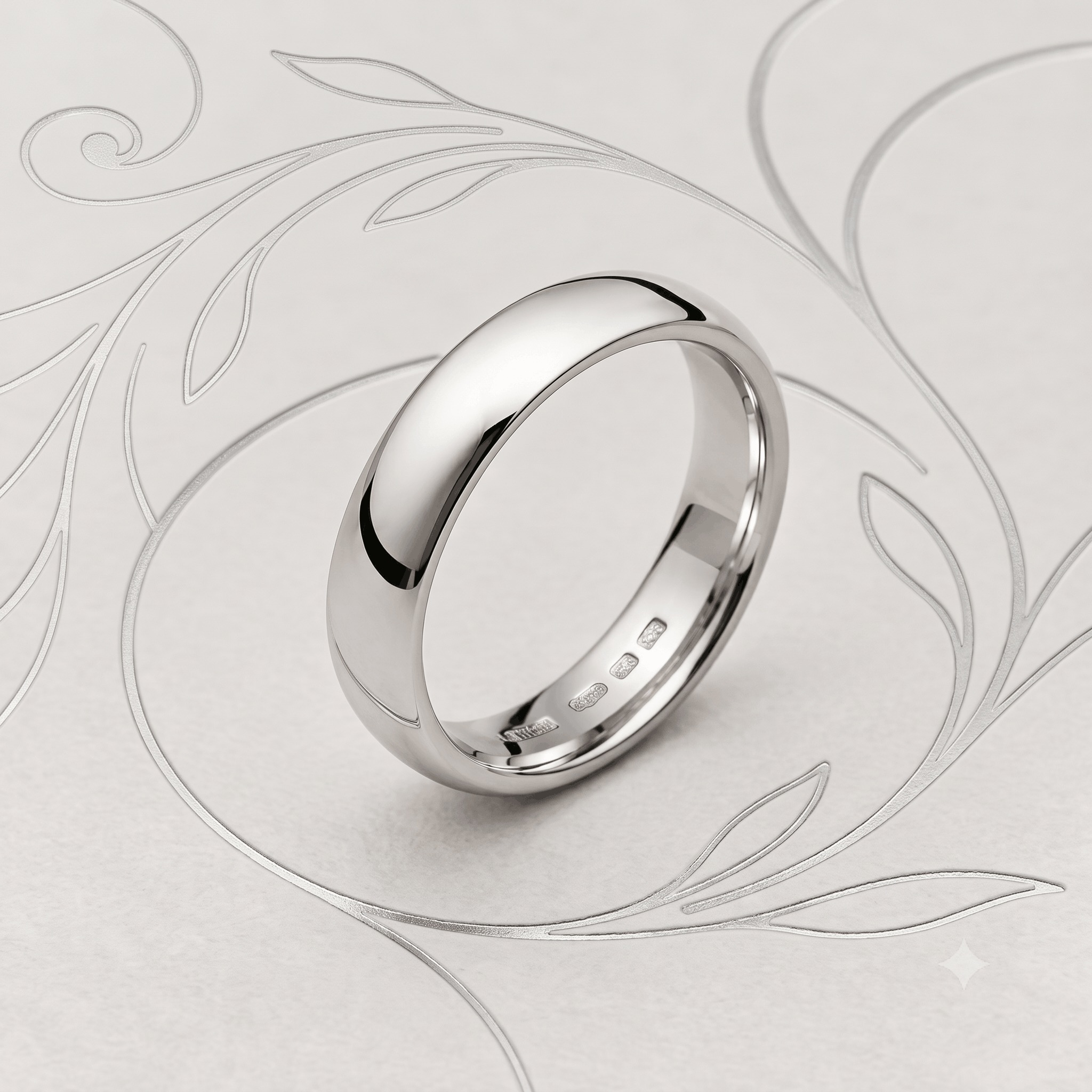
A platinum setting develops a beautiful satin patina over years of daily wear — a sign of a well-loved piece.
When you prefer to restore the original mirror polish over the natural patina.
After any incident involving impact, bending, or scratching from a hard surface.
As part of your annual jewellery service, alongside a prong and setting inspection.
Platinum is hypoallergenic, making it the recommended choice for people with sensitive skin. It does not need rhodium plating and will maintain its natural white colour indefinitely.
How you store your jewellery matters as much as how you clean it. Improper storage is among the most common causes of scratching, tangling, and irreversible damage — all of which are easily prevented.
A fabric-lined box with individual compartments prevents scratching and absorbs excess moisture. Store pieces in a fabric-lined jewellery box or a chamois bag to prevent scratches and abrasion.
Keep each piece in its own soft cloth pouch. Especially important for diamond jewellery — diamonds will scratch softer stones and metals if stored in contact.
A dedicated jewellery roll or compact case with padded compartments is essential when travelling. Never pack fine jewellery loosely in checked luggage.
Store jewellery away from humidity, sunlight, and heat. Bathroom cabinets are not suitable due to moisture and temperature fluctuation from steam.
It is important to store pieces separately, in a fabric-lined jewellery box or a chamois bag, to prevent scratches and abrasion from contact with other pieces.
Your jewellery should be the first thing you take off at night and the last thing you put on in the morning — this practice alone will dramatically extend the life of every piece.
Never store a diamond piece next to pearls, opals, or softer gemstones. Diamonds will scratch them, even through fabric, if contact occurs.
Keep all laboratory reports and certificates separate from the jewellery itself — store them securely in a file or safe for documentation purposes.
Check your jewellery periodically. If you find any gemstone or diamond that is loose or not set properly, get it repaired immediately before wearing again.
When travelling, wrap jewellery individually in soft cloth or small cases to avoid any impact damage during transit.
Carry high-value pieces in your hand luggage — never in checked baggage where pressure and handling can cause damage or loss.
Thread necklaces through a soft straw and fasten the clasp to prevent tangling during travel.
Photograph every piece before travelling — this provides documentation for insurance purposes in the event of loss.
Use individual zip-sealed pouches for rings and earrings when a dedicated travel case is not available.
Your engagement ring is worn every day, making it the piece most exposed to daily wear, chemicals, and physical contact. A consistent care routine ensures it remains as extraordinary as the moment it was placed on your finger.
Your diamond engagement ring is invaluable – a symbol of love to be treasured forever. Yet with everyday wear, it is very important to handle it properly and clean it regularly. An engagement ring experiences more daily exposure than any other piece. Oils from the skin, residue from hand creams, and soap build-up beneath the setting all accumulate quickly.
Always pick up your diamond engagement ring by its band – not by the setting or the stone. This helps keep the diamond clean and ensures it stays securely in its setting.
Clean at home every 1–2 weeks using warm soapy water and a soft brush – follow the steps in Section 02 of this guide.
Annual professional cleaning and prong inspection is strongly recommended for daily-wear pieces.
Have prongs checked every 6 months if the ring is worn daily – prong wear is gradual and easily addressed when caught early.
Purchase insurance for your diamond engagement ring so you are protected in the event of loss, theft, or damage.
If you feel the stone is loose or moving, take it to a jewellery expert immediately – do not continue wearing it.
A diamond solitaire requires weekly cleaning and a biannual prong check to maintain its full brilliance and security
Removing your ring in the following situations protects both the stone and the setting from long-term damage.
Chlorine and salt water both affect metal settings. Repeated exposure can cause prongs to weaken and stones to loosen over time.
Impact, grip pressure, and perspiration can damage prongs, bend settings, and leave unwanted residue beneath the stone.
Household cleaners, particularly bleach-based products, react with gold alloys and can permanently damage metal settings and prongs.
Soil, dirt, and hard surface contact add grime and risk. You also increase the chance of losing the ring while digging or weeding.
Lotion, cream, hairspray, and perfume create a film beneath the stone. Always apply cosmetics first, then put on your ring last.
A hard impact on a diamond can result in chipping or even breakage. Diamonds are not delicate — but they are not indestructible either.
A clear summary of care frequencies, professional servicing guidance, and essential reminders for every piece in your collection — all in one place.
A simple, consistent routine protects both beauty and structural integrity across all jewellery types.
| Piece Type | At-Home Cleaning | Professional Service | Key Notes |
|---|---|---|---|
| Diamond Engagement Ring | Every 1–2 Weeks | Annually | Prong inspection every 6 months when worn daily |
| Diamond Jewellery (General) | Monthly | Annually | Soak method recommended; check settings regularly |
| Gold Jewellery | Monthly | Annually | White gold: rhodium re-plating every 1–2 years |
| Platinum Jewellery | Monthly | Every 2–3 Years | Patina is natural; polishing when preferred |
| Daily Wipe-Down | After Every Wear | Not Required | 30 seconds with a soft, lint-free cloth — lasting results |
These principles apply across all fine jewellery — regardless of metal type, stone, or setting.
Clean your jewellery regularly with warm water, mild soap, and a soft cloth or brush
Apply perfume, cosmetics, and lotions before wearing jewellery — not after
Store each piece separately in a soft pouch or a fabric-lined box
Remove jewellery before heavy work, gardening, household cleaning, or exercise
Have jewellery professionally inspected and cleaned once a year
Wipe pieces down with a dry, lint-free cloth after each wear
Insure significant pieces and have them revalued every 3–5 years
Inform your jeweller immediately if a stone feels loose or is moving
Expose fine jewellery to chlorine, bleach, or harsh household cleaning agents
Wear jewellery while swimming, in jacuzzis, or in chlorinated water of any kind
Use toothpaste, abrasive cleaners, or rough cloths — these cause micro-scratches on metals and stones
Store multiple pieces together without individual protection
Sleep in diamond jewellery regularly — prongs can catch on fabric and bend over time
Delay getting a loose prong or damaged setting repaired — risk of stone loss increases significantly
Use home ultrasonic cleaners on included, treated, or older stones without professional guidance first
Pack fine jewellery in checked luggage when travelling
Before Wearing: Apply cosmetics and perfume first. Put jewellery on last.
After Wearing: Wipe with a soft dry cloth. Store individually in a lined pouch or box.
Weekly: Soak daily-wear pieces in warm soapy water and brush gently.
Monthly: Deep-clean all jewellery. Check clasps, prongs, and stone security.
