 +91 9112515557
The shape of your diamond is the first and most personal decision you will make. Each of the ten classic shapes has its own optical character, light performance, and emotional resonance. This guide tells you everything you need to know.
While cut quality, colour, and clarity determine how beautiful a diamond is, shape determines its entire visual identity — the silhouette on the finger, the character of the light it returns, and the statement it makes. Unlike the other quality factors, shape is almost entirely a matter of personal preference and should always include input from the person who will wear it.
All ten classic diamond shapes fall into one of two cutting families: brilliant cuts and step cuts. Brilliant cuts feature triangular and kite-shaped facets arranged to maximise light return — they sparkle intensely. Step cuts feature parallel rectangular facets — they produce a dramatic, reflective "hall of mirrors" effect that emphasises elegance over fire.
Two Diamond Cut Families
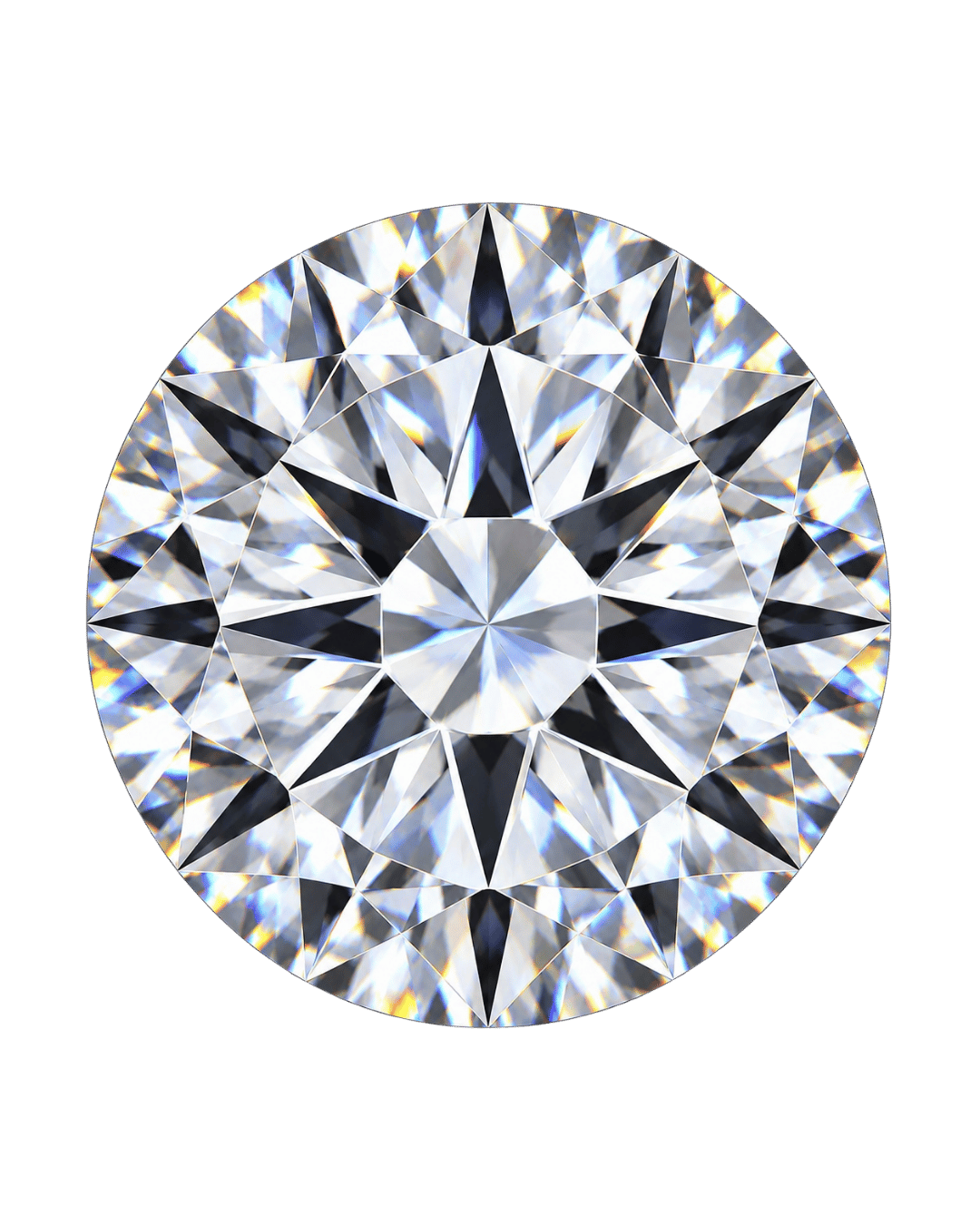
Maximum sparkle and fire. Triangular facets bounce light in every direction. Shapes: Round, Princess, Oval, Marquise, Pear, Cushion, Radiant, Heart.
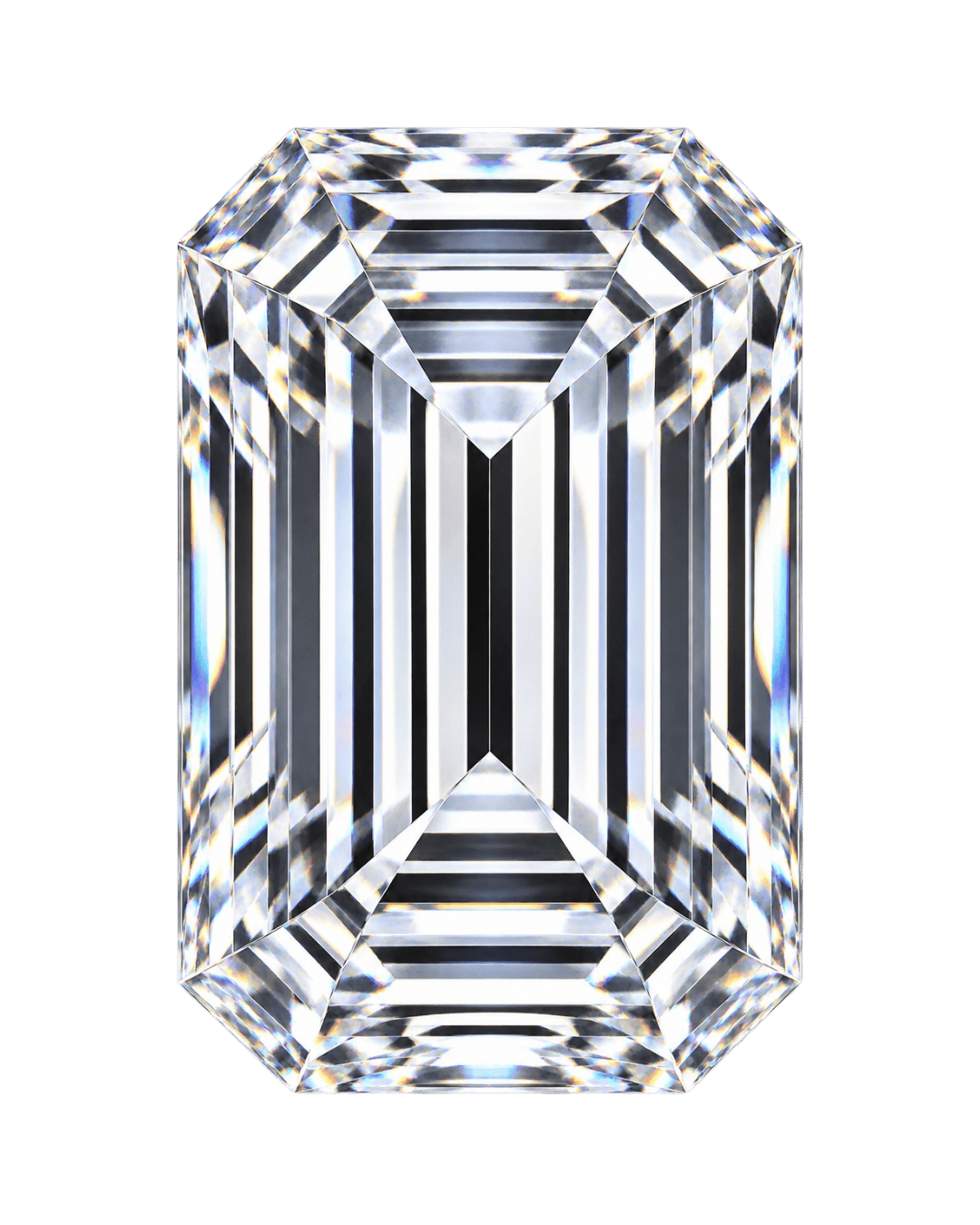
Elegant hall-of-mirrors effect. Rectangular parallel facets reflect large flashes of light. Shapes: Emerald, Asscher.
The round brilliant is the most popular diamond shape in the world, accounting for approximately 75% of all diamonds sold. Virtually all round diamonds are brilliant-cut, meaning they have 58 facets (57 when there is no culet). This precise facet design was mathematically optimised to maximise light return, making the round superior to all other shapes in brilliance, fire, and scintillation.
Best overall light performance of any shape due to its perfectly symmetrical geometry.
Costs 25–35% more per carat than fancy shapes due to higher rough diamond waste during cutting.
Ideal L/W ratio is 1.00–1.01. The only shape for which GIA issues a formal cut grade.
Hides inclusions and colour better than most other shapes — forgiving across all clarity and colour grades.
| Factor | Excellent | Very Good | Good |
|---|---|---|---|
| Table % | 53 – 58 | 52 – 53 or 58 – 60 | 51 or 61 – 64 |
| Depth % | 59 – 62.3 | 58 – 58.9 or 62.4 – 63.5 | 57.5 – 57.9 or 63.6 – 64.1 |
| L/W Ratio | 1.00 – 1.01 | 1.00 – 1.01 | 1.00 – 1.01 |
| Colour (0.51–1.0 ct) | D – G | H – I | J – K |
| Clarity (0.51–1.0 ct) | FL – VS1 | VS2 – SI1 | SI2 |
Created in 1980, the princess is the most popular fancy diamond shape — especially for engagement rings. Its square brilliant-cut facet pattern delivers fire and sparkle closest to a round diamond, while offering a distinctly modern aesthetic at a more accessible price per carat.
Lower price-per-carat than round — roughly 60% of rough stone weight is retained in cutting.
Corner-to-corner measurement is ~15% greater than a same-weight round, creating the illusion of greater size.
L/W ratio of 1.05 or less appears square to the naked eye.
Always set with prongs that cover and protect the four corners — the most vulnerable points.
| Factor | Excellent | Very Good | Good |
|---|---|---|---|
| Table % | 67 – 72 | 59 – 66 or 73 – 75 | 56 – 58 or 76 – 82 |
| Depth % | 64 – 75 | 64 – 75 | 58 – 63.9 or 75.1 – 80 |
| L/W Ratio | 1.00 – 1.03 | 1.00 – 1.03 | 1.04 – 1.05 |
| Colour (0.51–1.0 ct) | D – F | G | H – I |
| Clarity (0.51–1.0 ct) | FL – VS1 | VS2 – SI1 | SI2 |
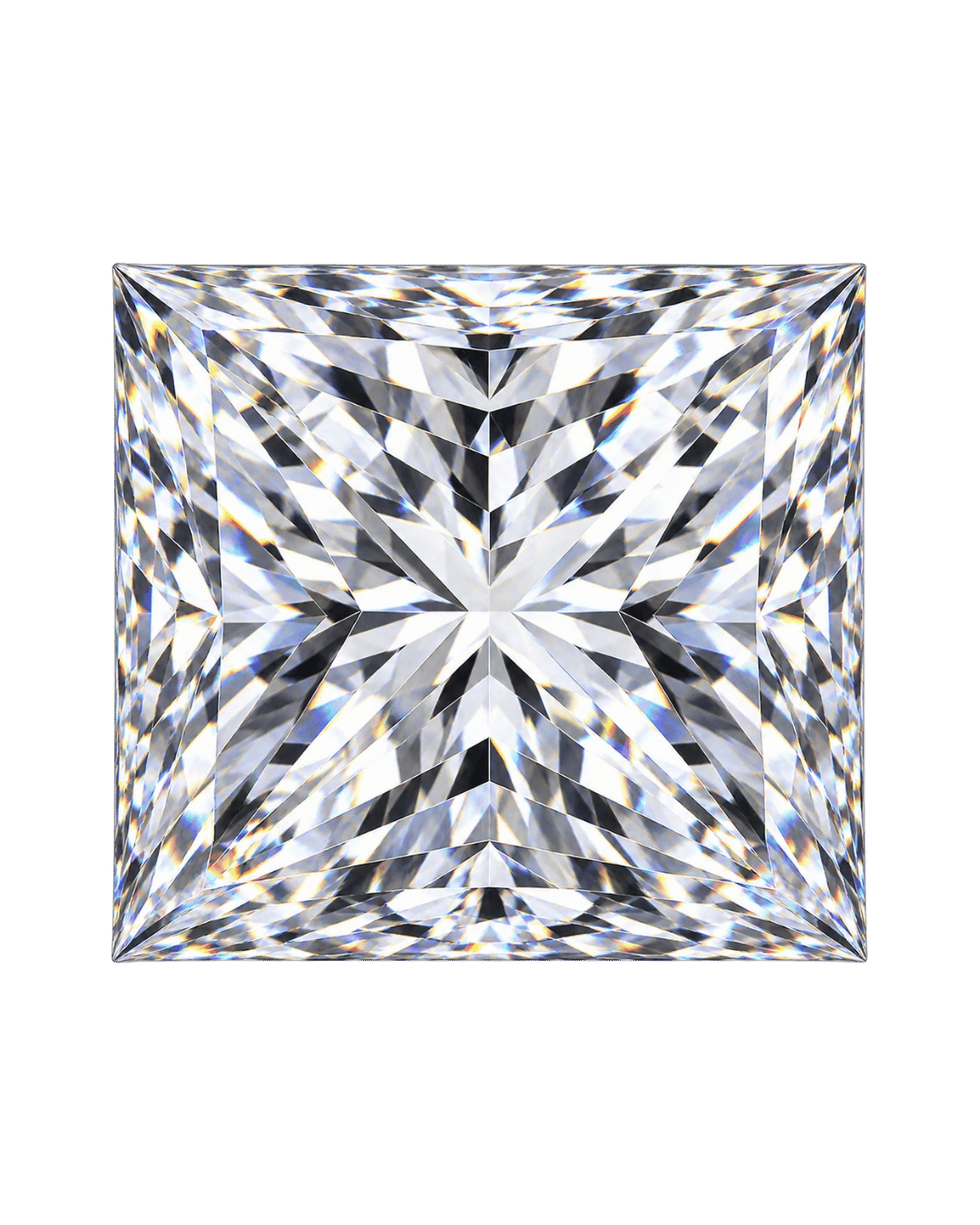
Created by Lazare Kaplan in the 1960s, the oval is a modified brilliant cut that delivers similar sparkle to a round diamond with the added visual benefit of an elongated silhouette. The shape creates the illusion of greater size and can make the wearer's fingers appear longer.
Classic L/W ratio of 1.35–1.50. Narrower ovals suit flanked settings; wider ovals suit solitaires.
Watch for the bow-tie effect — a dark shadow across the centre. Only visible in person, not on certificates.
G–H colour recommended for white gold/platinum settings; I–J works beautifully in yellow gold.
| Factor | Excellent | Very Good | Good |
|---|---|---|---|
| Table % | 53 – 63 | 52 or 64 – 65 | 51 or 66 – 68 |
| Depth % | 58 – 62 | 56 – 57.9 or 62.1 – 66 | 53 – 55.9 or 66.1 – 71 |
| L/W Ratio | 1.35 – 1.50 | 1.30 – 1.34 or 1.51 – 1.55 | 1.25 – 1.29 or 1.56 – 1.60 |
| Colour (0.51–1.0 ct) | D – F | G | H – I |
| Clarity (0.51–1.0 ct) | FL – VS1 | VS2 – SI1 | SI2 |
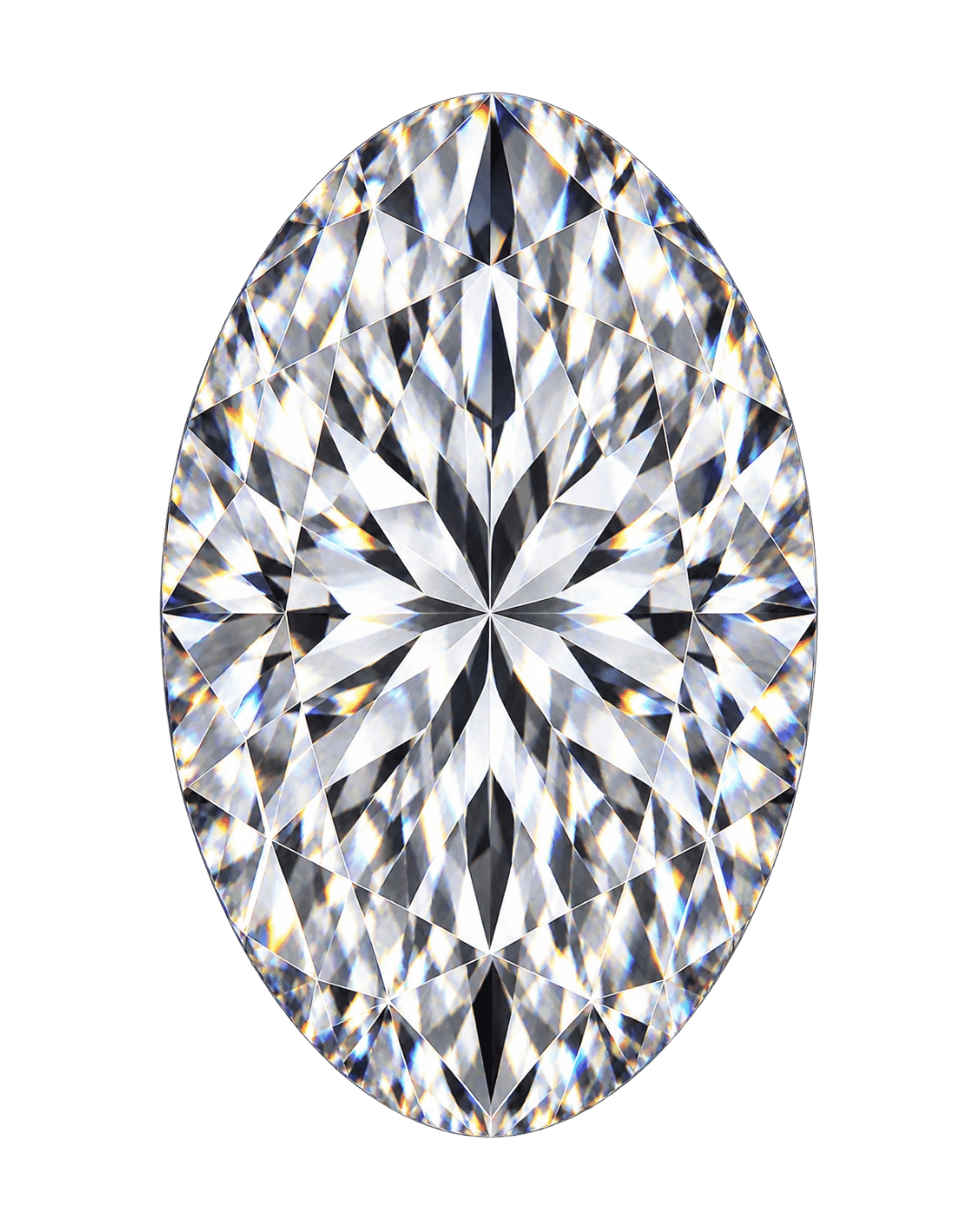
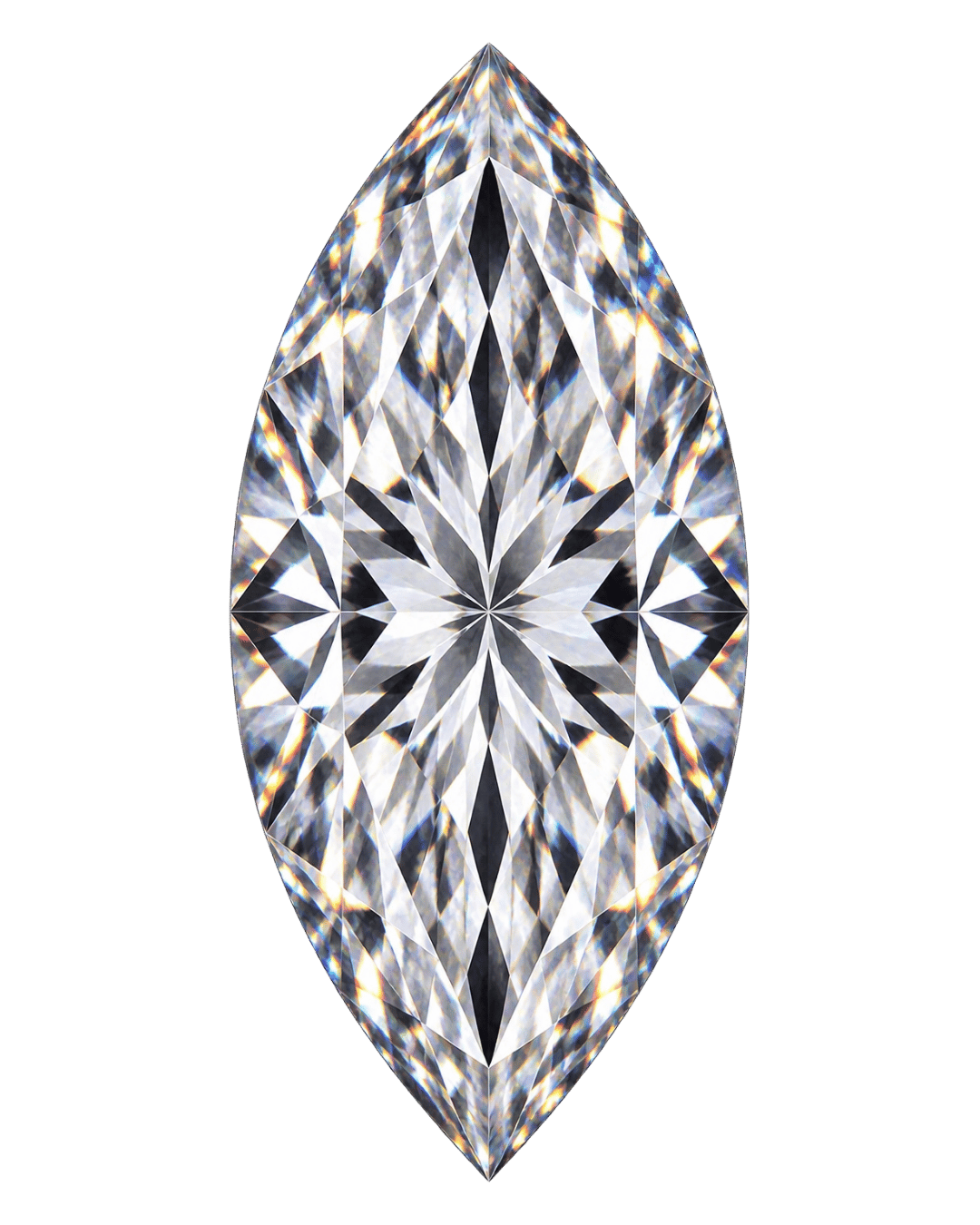
Named for the Marquise of Pompadour, this football-shaped brilliant cut has one of the largest surface areas of any diamond shape, making it an excellent choice when maximising perceived size is the priority. Its elongated form also flatters the wearer's hand.
Largest surface area per carat of almost any shape — appears significantly bigger than its weight suggests.
Classic L/W ratio is 1.85–2.00. Symmetry is critical — the two pointed ends must align perfectly.
Bow-tie effect possible in some stones — inspect in person before purchasing.
Always protect the two pointed ends with prongs — the most vulnerable points for chipping.
| Factor | Excellent | Very Good | Good |
|---|---|---|---|
| Table % | 53 – 63 | 52 or 64 – 65 | 51 or 66 – 68 |
| Depth % | 58 – 62 | 56 – 57.9 or 62.1 – 66 | 53 – 55.9 or 66.1 – 71 |
| L/W Ratio | 1.85 – 2.00 | 1.75 – 1.84 or 2.01 – 2.15 | 1.65 – 1.74 or 2.16 – 2.30 |
| Colour (0.51–1.0 ct) | D – F | G | H – I |
| Clarity (0.51–1.0 ct) | FL – VS1 | VS2 – SI1 | SI2 |
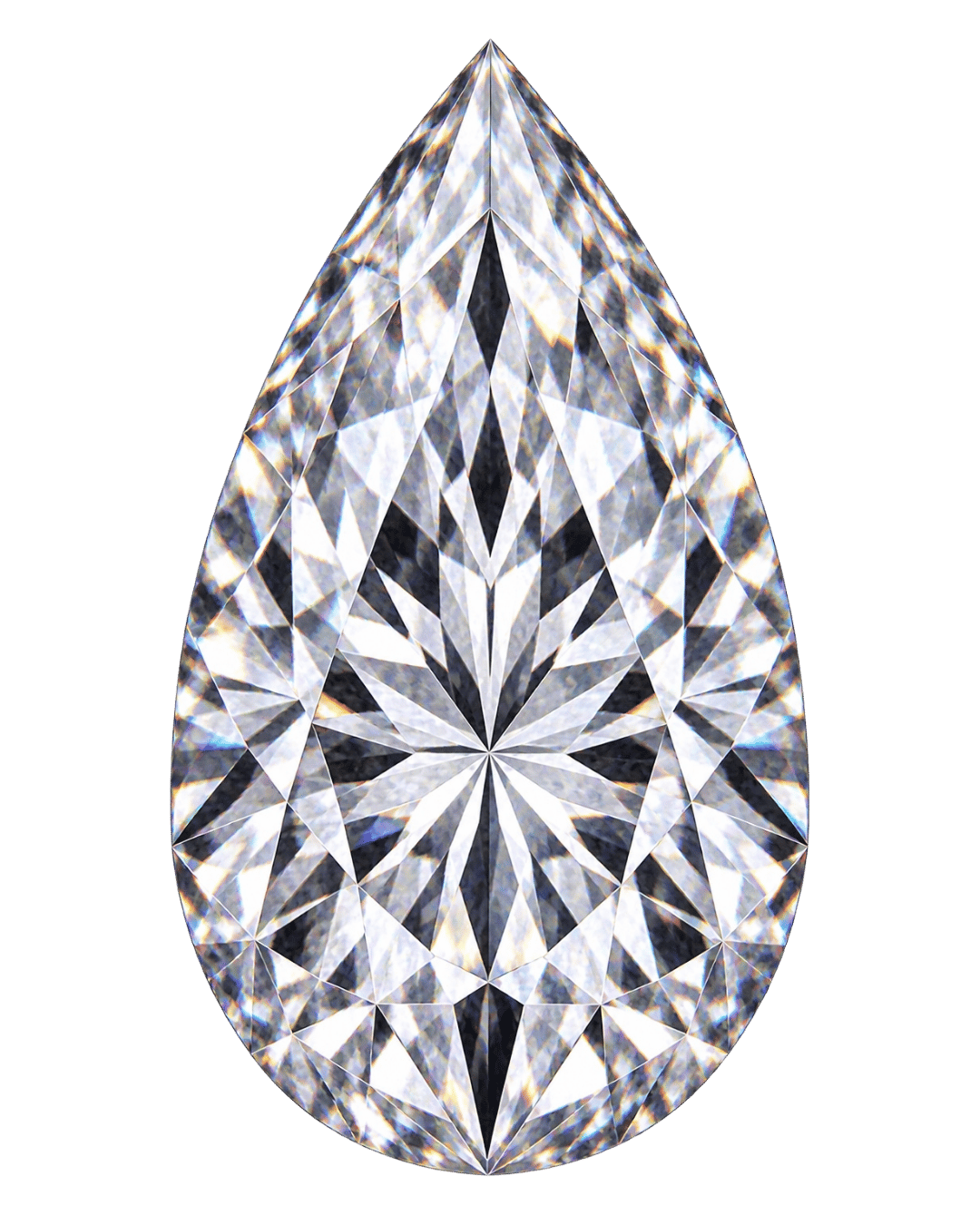
A brilliant-cut combination of round and marquise, the pear shape tapers to a point at one end and is always worn with the point directed toward the hand. Like the oval and marquise, it creates the illusion of a longer, slimmer finger and a larger stone.
Classic L/W ratio 1.45–1.55. A narrow pear suits earrings; a wider shape suits solitaire rings.
Symmetry is critical — the point must align with the apex of the rounded end. Wings must be uniform.
Bow-tie effect possible — inspect in person to assess its severity.
Always set with a prong at the point — the most vulnerable location for chipping.
| Factor | Excellent | Very Good | Good |
|---|---|---|---|
| Table % | 53 – 63 | 52 or 64 – 65 | 51 or 66 – 68 |
| Depth % | 58 – 62 | 56 – 57.9 or 62.1 – 66 | 53 – 55.9 or 66.1 – 71 |
| L/W Ratio | 1.45 – 1.55 | 1.40 – 1.44 or 1.56 – 1.65 | 1.35 – 1.39 or 1.66 – 1.80 |
| Colour (0.51–1.0 ct) | D – F | G | H – I |
| Clarity (0.51–1.0 ct) | FL – VS1 | VS2 – SI1 | SI2 |
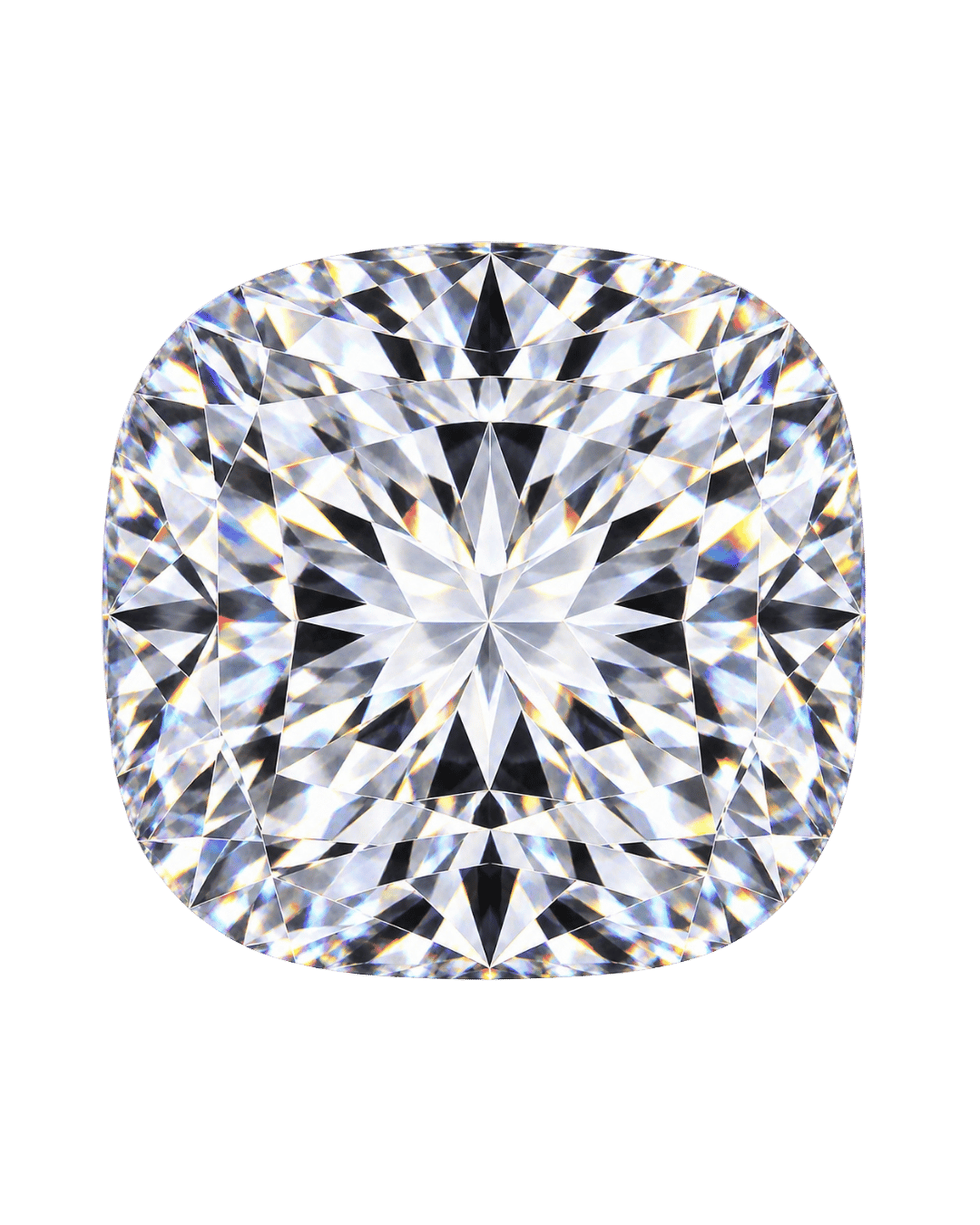
Once called the "old mine cut," the cushion combines a square outline with soft, rounded corners — resembling a pillow. For its first century of existence it was the world's dominant diamond shape. Today its antique warmth combined with modern cutting refinements has driven a strong revival.
Often exhibits better fire than round brilliants — larger, chunkier light flashes with a romantic, antique quality.
Classic L/W ratio 1.00 (square), though 1.10–1.20 rectangles are popular. Personal preference dictates.
Three pavilion facet patterns exist: standard, modified, and "crushed ice" — each produces a different look.
More forgiving of colour than step cuts — G–H works beautifully in any metal type.
| Factor | Excellent | Very Good | Good |
|---|---|---|---|
| Table % | 61 – 67 | 58 – 60 or 68 – 70 | 56 – 57 or 71 |
| Depth % | 61 – 67 | 58 – 60.9 or 67.1 – 70 | 56 – 57.9 or 70.1 – 71 |
| L/W Ratio (Square) | 1.00 – 1.03 | 1.00 – 1.03 | 1.04 – 1.05 |
| L/W Ratio (Rectangle) | 1.15 – 1.20 | 1.10 – 1.14 or 1.21 – 1.30 | 1.08 – 1.09 or 1.31 – 1.50 |
| Colour (0.51–1.0 ct) | D – F | G | H – I |
| Clarity (0.51–1.0 ct) | FL – VS1 | VS2 – SI1 | SI2 |
Originally developed for cutting emeralds, the emerald cut features step-cut facets and a large open table — producing a sophisticated "hall of mirrors" effect rather than sparkle. Its long, elegant lines and dramatic light reflections give it a timeless, architectural quality unlike any brilliant cut.
Classic L/W ratio around 1.50. For a square look, consider the Asscher instead.
Large open facets make colour easier to see — move up one colour grade compared to brilliant cuts.
Inclusions are more visible in step cuts — VS2 or better recommended. SI1 is more of a risk than in brilliant cuts.
The most architecturally elegant of all diamond shapes — a favourite of those who prefer understated luxury.
| Factor | Excellent | Very Good | Good |
|---|---|---|---|
| Table % | 61 – 69 | 57 – 60 or 70 – 72 | 54 – 56 or 73 – 74 |
| Depth % | 61 – 67 | 59 – 60.9 or 67.1 – 70 | 57 – 58.9 or 70.1 – 74 |
| L/W Ratio (Square) | 1.00 – 1.03 | 1.00 – 1.03 | 1.04 – 1.05 |
| L/W Ratio (Rectangle) | 1.40 – 1.50 | 1.30 – 1.39 or 1.51 – 1.60 | 1.20 – 1.29 or 1.61 – 1.80 |
| Colour (0.51–1.0 ct) | D – F | G | H – I |
| Clarity (0.51–1.0 ct) | FL – VS1 | VS2 | SI1 |
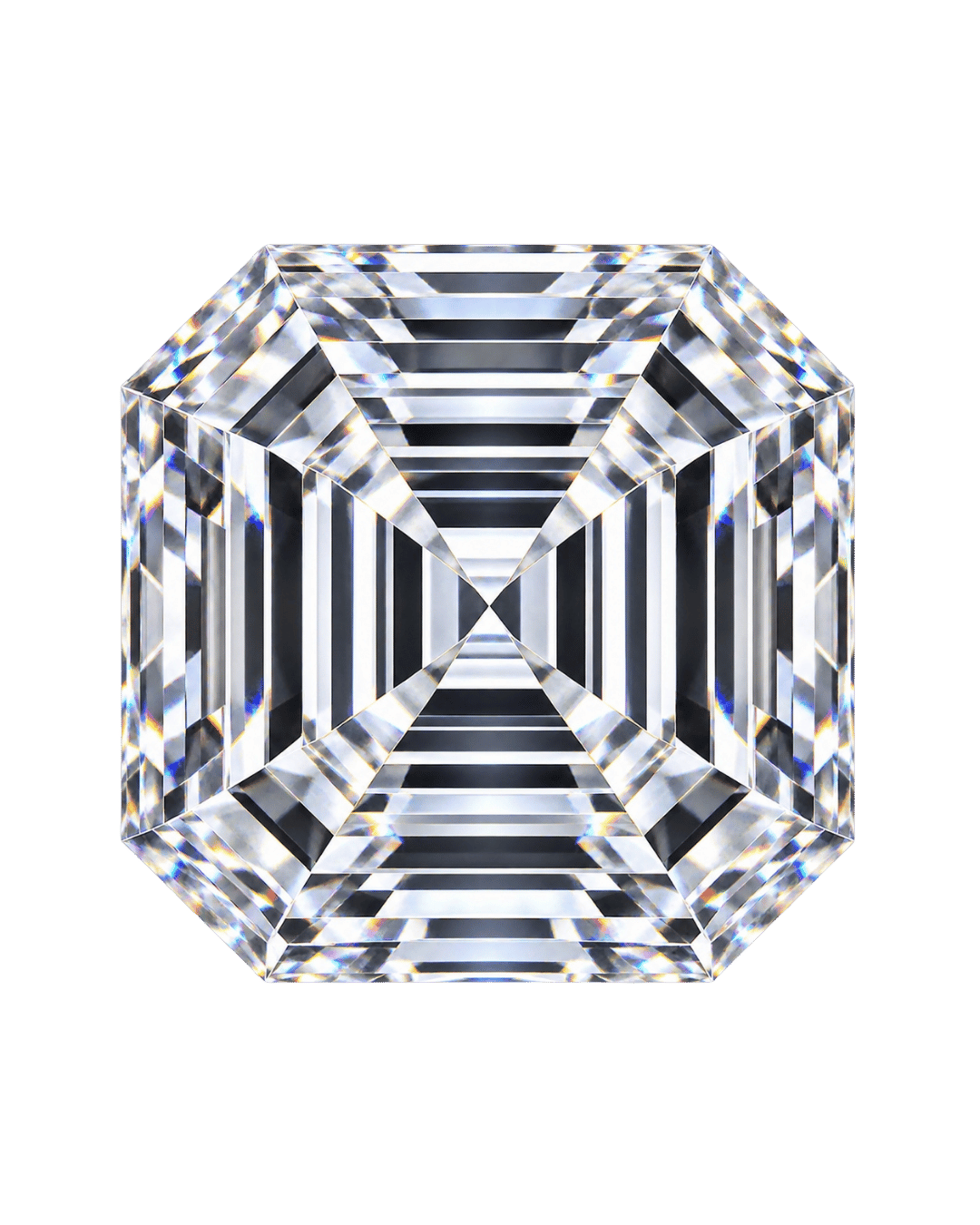
First produced in 1902 by the Asscher Brothers of Holland — who also cut the world's largest rough diamond, the 3,106-carat Cullinan — the Asscher is essentially a square emerald cut with larger step facets, a higher crown, and a smaller table. A well-cut Asscher displays concentric squares of light when viewed from above.
Classic L/W ratio 1.00 (square). Ratios of 1.05 or less appear perfectly square to the naked eye.
Like the emerald, open facets show colour and inclusions more readily — move up one grade in each.
Cropped corners give an octagonal appearance — sits squarely in a four-prong setting.
Its Art Deco heritage makes it a favourite for vintage-inspired engagement rings.
| Factor | Excellent | Very Good | Good |
|---|---|---|---|
| Table % | 61 – 69 | 57 – 60 or 70 – 72 | 54 – 56 or 73 – 74 |
| Depth % | 61 – 67 | 59 – 60.9 or 67.1 – 70 | 57 – 58.9 or 70.1 – 74 |
| L/W Ratio | 1.00 – 1.03 | 1.00 – 1.03 | 1.04 – 1.05 |
| Colour (0.51–1.0 ct) | D – F | G | H – I |
| Clarity (0.51–1.0 ct) | FL – VS1 | VS2 | SI1 |
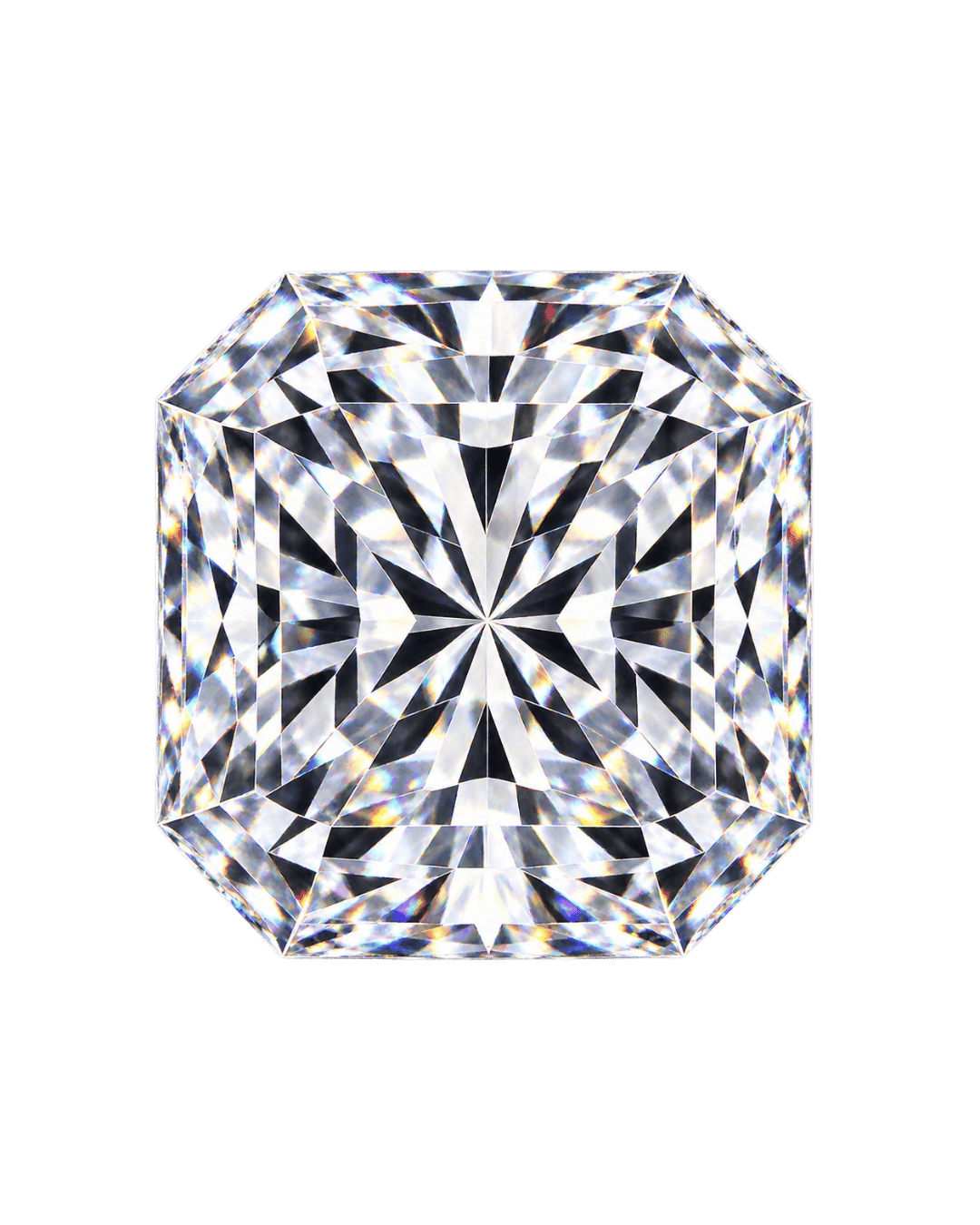
The radiant was the first square cut to receive a complete brilliant-cut facet pattern on both crown and pavilion, creating intense sparkle in a rectangular or square outline. Popular from the 1980s, it is a perfect bridge between the cushion's softness and the princess's geometry - set beautifully with either rounded or square-cornered accent diamonds.
The rectangular radiant suits buyers who love the emerald's shape but want the sparkle of a round.
Square radiant (L/W 1.00–1.05) looks virtually identical to a princess once set in prongs.
Bow-tie effect possible in more rectangular cuts — inspect in person.
More forgiving of inclusions than step cuts due to its brilliant facet pattern.
| Factor | Excellent | Very Good | Good |
|---|---|---|---|
| Table % | 61 – 69 | 57 – 60 or 70 – 72 | 54 – 56 or 73 – 74 |
| Depth % | 61 – 67 | 59 – 60.9 or 67.1 – 70 | 57 – 58.9 or 70.1 – 74 |
| L/W Ratio (Square) | 1.00 – 1.03 | 1.00 – 1.03 | 1.04 – 1.05 |
| L/W Ratio (Rectangle) | 1.20 – 1.30 | 1.15 – 1.19 or 1.31 – 1.35 | 1.10 – 1.14 or 1.36 – 1.40 |
| Colour (0.51–1.0 ct) | D – F | G | H – I |
| Clarity (0.51–1.0 ct) | FL – VS1 | VS2 – SI1 | SI2 |
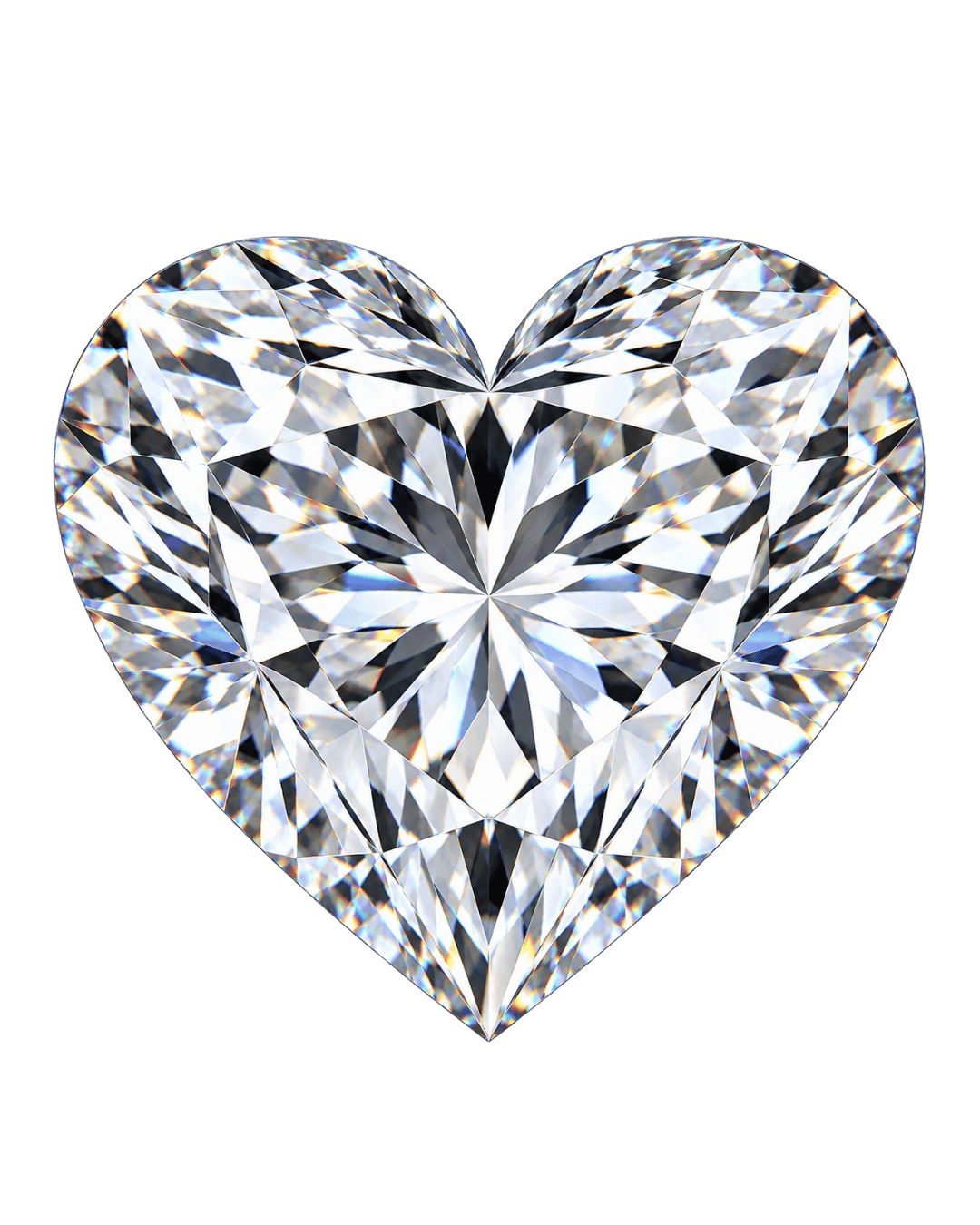
The ultimate symbol of romantic love, the heart-shaped diamond is a modified brilliant cut that is as unmistakable in meaning as it is in form. Popular in both rings and pendants, the heart's shape demands exceptional symmetry — the two lobes must be perfectly identical, the cleft sharp and distinct, and the wings gently curved.
Classic L/W ratio approximately 1.00. Narrower hearts (1.05–1.15) suit pendants; wider (.85–1.00) suit rings.
Symmetry is everything — even a small misalignment makes the shape look unbalanced once set.
Not recommended under 0.50 carats — the heart shape is difficult to perceive in smaller stones once set in prongs.
A three-prong setting (one on each lobe, one at the point) best preserves the heart outline in the final piece.
| Factor | Excellent | Very Good | Good |
|---|---|---|---|
| Table % | 53 – 63 | 52 or 64 – 65 | 51 or 66 – 68 |
| Depth % | 58 – 62 | 56 – 57.9 or 62.1 – 66 | 53 – 55.9 or 66.1 – 71 |
| L/W Ratio | .95 – 1.02 | .89 – .94 or 1.03 – 1.05 | .83 – .87 or 1.06 – 1.10 |
| Colour (0.51–1.0 ct) | D – F | G | H – I |
| Clarity (0.51–1.0 ct) | FL – VS1 | VS2 – SI1 | SI2 |
A quick reference across the most important buying considerations for each shape.
| Shape | Cut Family | Best For | Ideal L/W Ratio | Colour Note | Clarity Note | Watch For |
|---|---|---|---|---|---|---|
| Round | Brilliant | Maximum sparkle; most versatile | 1.00 – 1.01 | G–H excellent value | SI1 often eye-clean | Premium cost vs fancy shapes |
| Princess | Brilliant | Modern style; engagement rings | 1.00 – 1.05 | G–H excellent value | SI1 often eye-clean | Protect corners with prongs |
| Oval | Brilliant | Elongating effect on fingers | 1.35 – 1.50 | G–H for white metal | SI1 often eye-clean | Bow-tie effect |
| Marquise | Brilliant | Maximum perceived size per carat | 1.85 – 2.00 | G–H; darker at points | SI1 often eye-clean | Bow-tie; symmetry of points |
| Pear | Brilliant | Unique look; earrings and rings | 1.45 – 1.55 | G–H; darker at point | SI1 often eye-clean | Bow-tie; protect point |
| Cushion | Brilliant | Antique look with modern fire | 1.00 – 1.20 | G–H good value | SI1 often eye-clean | Three distinct pavilion styles |
| Emerald | Step | Elegant, architectural; large look | 1.40 – 1.50 | F–G; colour more visible | VS2+ recommended | Inclusions more visible |
| Asscher | Step | Art Deco; vintage-inspired rings | 1.00 – 1.05 | F–G; colour more visible | VS2+ recommended | Inclusions more visible |
| Radiant | Brilliant | Emerald shape with brilliant sparkle | 1.00 – 1.30 | G–H good value | SI1 often eye-clean | Bow-tie in longer cuts |
| Heart | Brilliant | Romantic; pendants and solitaires | 0.95 – 1.02 | G–H good value | SI1 often eye-clean | Symmetry essential; min 0.50ct |
Shape is the outline — round, oval, pear. Cut is the quality of the proportions and polish. A beautifully shaped diamond can still look dull with a poor cut grade. Always confirm cut quality separately from shape.
Emerald and Asscher cuts expose colour and inclusions more than brilliant cuts. If you love step cuts, budget for a higher colour (F–G) and clarity (VS2+) grade than you would for a round or oval of the same budget.
Shape preference is the most personal aspect of any diamond purchase. If the diamond is a gift, always try to discover the recipient's preference first. Shape is the one aspect of a diamond that cannot be changed once purchased.
